
The Hidden Dynamics of Recruiting Agencies
An Honest Look at Incentives, Tactics, and Who They Really Represent

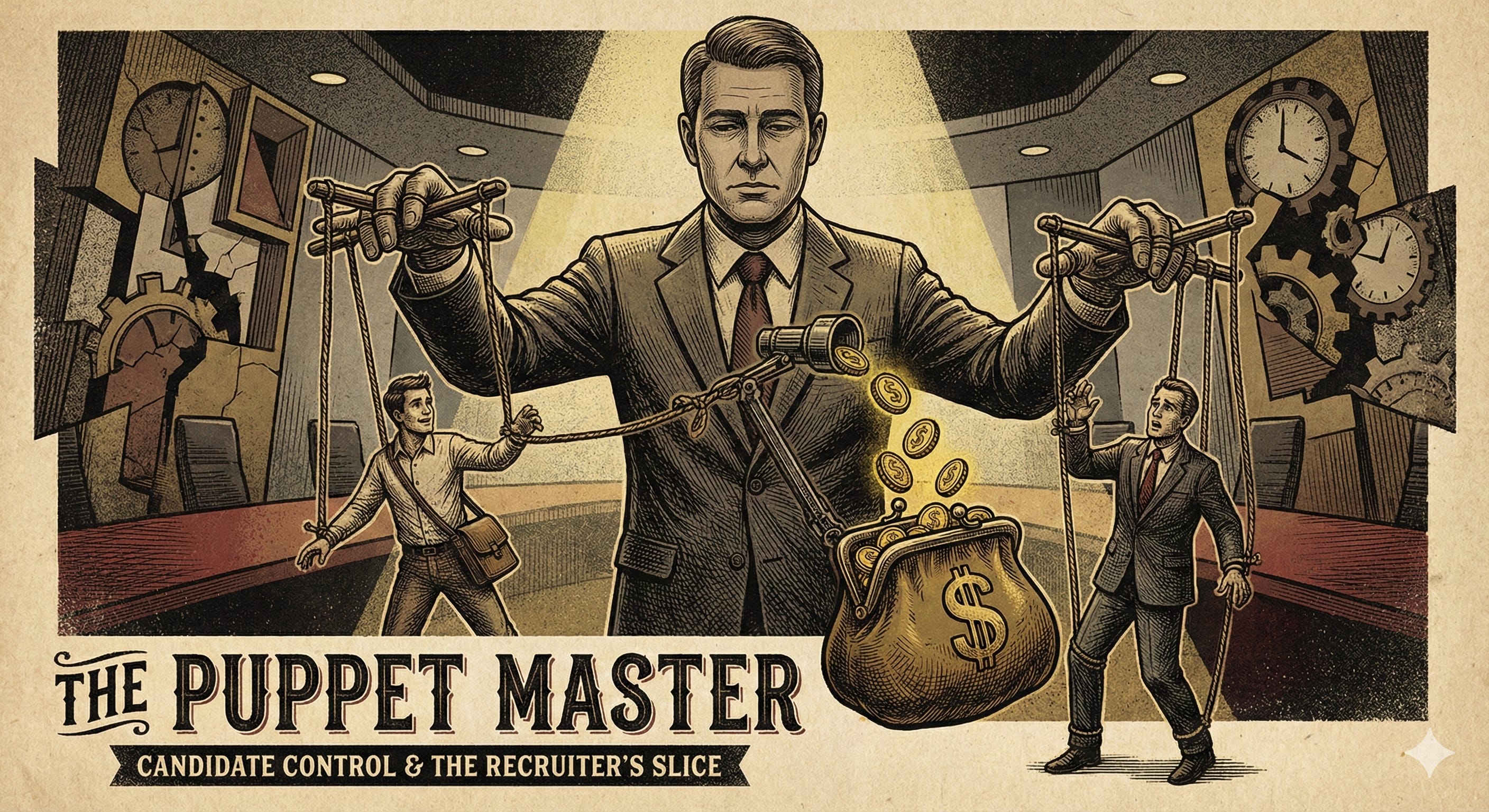
"Show me the incentive and I'll show you the outcome." — Charlie Munger
There’s a performance happening in the employment market, and most participants don’t realize they’re actors in someone else’s play. The recruiting agency sits at center stage, script in hand, directing both candidates and companies through carefully choreographed scenes—while the audience remains unaware that neither party is the intended beneficiary of the production.
For twenty years, I watched this theater from an unusual vantage point: as someone who refused to read from the corporate script. I’ve observed how organizations systematically design misalignment into their structures, then act surprised when the predictable outcomes materialize. Recruiting agencies represent one of the purest expressions of this phenomenon—a business model so openly built on conflicting incentives that the industry has normalized practices that would be considered deceptive manipulation in any other context.
This isn’t another article warning you about obvious recruiting scams or teaching you how to “work with” agencies more effectively. Those pieces accept the premise that the system functions as designed and merely needs optimization. This analysis rejects that premise entirely.
What follows is a systematic examination of how recruiting agencies actually operate—not how they present themselves in marketing materials, not how career advisors suggest you should engage with them, but how their economic incentives drive behavior that serves neither candidates nor companies. We’ll examine the commission structures that reward salary inflation over fit, the information control tactics that prevent direct negotiation, the psychological manipulation techniques taught in recruiter training programs, and the surveillance systems designed to extract fees from “backdoor” hires.
By the time we’re finished, you’ll understand why agencies remove your contact information from your resume before submitting it, why references are primarily a business development tool, why temp-to-perm arrangements generate double fees, and why the person claiming to represent your interests in the hiring process is structurally incentivized to do the opposite.
The core thesis is straightforward and uncomfortable: Recruiters don’t represent candidates. They don’t represent companies. They represent themselves—or more precisely, they represent the commission structure that pays them. Everything else—candidate welfare, company culture fit, long-term retention—is incidental to that primary allegiance.
This isn’t a moral judgment about individual recruiters. Many are perfectly decent people operating within a broken system. This is an analysis of how incentive structures produce predictable outcomes, and how an entire industry has built itself on the foundation of misaligned interests while maintaining the performance of neutral facilitation.
The curtain is about to rise on what recruiting agencies actually do when nobody’s watching. What you’re about to read won’t help you “work the system better.” It will help you see the system for what it is.
Act I: The Commission Trap—How the Payment Model Breaks Everything
The Economic Foundation
The recruitment business model appears elegantly simple on the surface: agencies earn a commission on successful placements, typically 10% to 30% of a candidate’s first-year salary, with senior and specialized roles commanding 25% to 50%. This percentage-based structure has become industry standard because it seems objective and straightforward—a clean transaction where everyone’s interests align.
But examine the incentive cascade this creates, and the entire performance falls apart.
